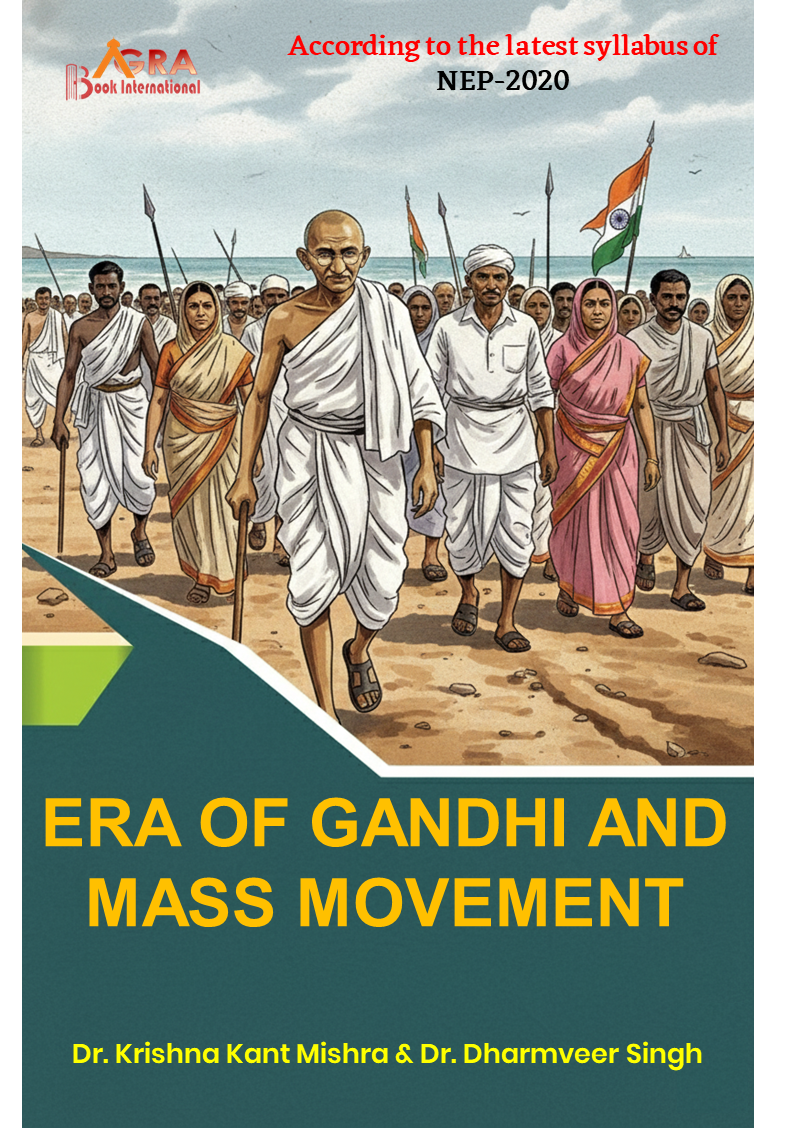
Era of Gandhi and Mass Movement by Dr. KK Mishra and Dr. DV Singh
Offers
-
 Rs250.00

Reviews & Ratings
This book offers a detailed and insightful study of one of the most transformative phases in Indian history—the Gandhian era and the rise of mass movements during the struggle for independence. It focuses on the period when Indian nationalism evolved from limited elite politics into a broad-based mass movement under the leadership of Mahatma Gandhi, fundamentally reshaping the nature and direction of the freedom struggle.
A major strength of the book lies in its comprehensive analysis of Gandhian philosophy and methods. It explores the core principles of truth (Satya), non-violence (Ahimsa), and Satyagraha, and explains how these ideas were translated into powerful political tools. The authors carefully examine how Gandhi mobilized millions of ordinary Indians—peasants, workers, women, and marginalized communities—bringing them into the mainstream of the national movement and transforming it into a truly participatory struggle.
The book provides a chronological and analytical account of major movements led by Gandhi, including the Non-Cooperation Movement, Civil Disobedience Movement, and Quit India Movement. Each movement is discussed in terms of its causes, objectives, strategies, and outcomes, along with its impact on Indian society and colonial rule. The authors also highlight the role of other national leaders, regional movements, and revolutionary activities, thereby presenting a balanced and inclusive narrative of the freedom struggle.
In addition to political developments, the book also examines the social and economic dimensions of the Gandhian era. It discusses issues such as rural upliftment, the promotion of khadi and village industries, social reforms, and the fight against untouchability. The interaction between nationalist politics and social transformation is analyzed in a nuanced manner, showing how the freedom movement was not just about political independence but also about building a just and equitable society.
The language of the book is clear, engaging, and academically sound, making it highly suitable for undergraduate and postgraduate students, as well as aspirants preparing for competitive examinations such as UPSC and state services. Complex historical developments are explained in a structured and accessible manner, enabling readers to grasp both factual details and analytical perspectives.
Overall, Era of Gandhi and Mass Movement is a well-structured and thought-provoking work that provides a deep understanding of the Gandhian phase of India’s freedom struggle. It not only highlights the significance of mass participation and non-violent resistance but also encourages readers to reflect on the enduring relevance of Gandhian ideas in contemporary society.
Frequently Bought Products
Product Queries (0)
Login Or Registerto submit your questions to seller
Other Questions
No none asked to seller yet
-
Rs250.00
What Our Customers Say

We focus on creating reliable, well-structured content that supports students, educators, and knowledge seekers worldwide.
With a commitment to excellence and innovation, we aim to make knowledge accessible, impactful, and future-ready.