-
 Rs250.00
Reviews & Ratings
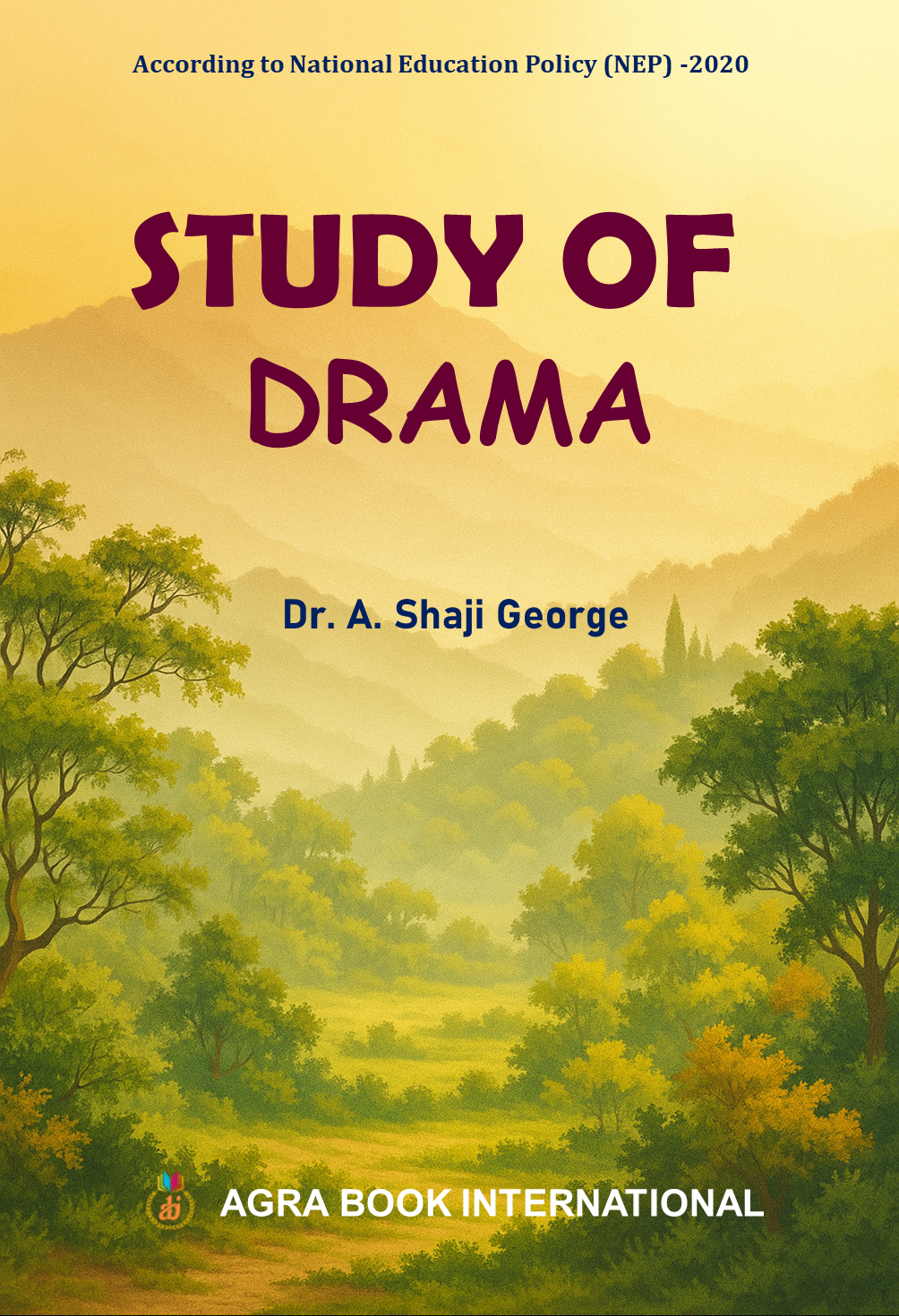
Study of Drama is a comprehensive academic textbook designed for undergraduate students pursuing English literature, particularly in alignment with the NEP-2020 framework. This book provides an in-depth exploration of drama as a literary genre, tracing its evolution from ancient Indian traditions to modern global expressions. Structured across five detailed units, it engages with classical, modern, Indian, and Western dramatic traditions to offer a holistic perspective on theatrical literature and performance.
The first unit, Introduction to Drama, initiates students into the fundamental principles of dramatic art, covering the historical and theoretical foundation of Sanskrit drama while classifying major types such as tragedy, comedy, historical plays, and one-act plays. It builds the essential framework required for a scholarly approach to drama.
The second unit, Indian Classical Drama, introduces the literary richness and aesthetic depth of ancient Indian theatre. It includes a focused reading of Abhigyan Shakuntalam (Act IV) by Mahakavi Kalidas, a landmark in poetic drama, alongside Mrichhakatikam (Act I) by Shudraka, offering socio-political insights through its realistic characterization and urban settings.
The third unit, Modern Indian Drama, shifts the lens to contemporary Indian playwrights who grapple with themes of identity, patriarchy, urban isolation, and socio-political conflicts. This unit includes Mahesh Dattani’s Where There’s a Will, a modern psychological play exploring familial dynamics and patriarchy, and Manjula Padmanabhan’s dystopian science-fiction drama Harvest, which critiques globalization and body commodification.
The fourth unit, Renaissance Drama, reorients the reader to the seminal works of European theatrical history. It features The Merchant of Venice by William Shakespeare, highlighting themes of justice, mercy, and racial conflict, and Doctor Faustus by Christopher Marlowe, a tragic allegory of ambition and human limitation rooted in the Renaissance spirit.
The fifth and final unit, Modern Drama, concludes the syllabus with two significant British playwrights: George Bernard Shaw’s Arms and the Man, a witty anti-romantic war play, and John Galsworthy’s The Silver Box, a critical realist play on class justice and institutional hypocrisy. Both works exemplify the social consciousness and satirical tone of modern British drama. With detailed textual analysis, critical commentary, and contextual insights, Study of Drama empowers learners to appreciate the diversity of theatrical forms across time, geography, and cultures. It is an essential resource for students, educators, and general readers who seek a structured and engaging understanding of dramatic literature.
Frequently Bought Products
Product Queries (0)
Login Or Registerto submit your questions to seller
Other Questions
No none asked to seller yet
-
Rs250.00
What Our Customers Say

We focus on creating reliable, well-structured content that supports students, educators, and knowledge seekers worldwide.
With a commitment to excellence and innovation, we aim to make knowledge accessible, impactful, and future-ready.